Monthly Archives: February 2026
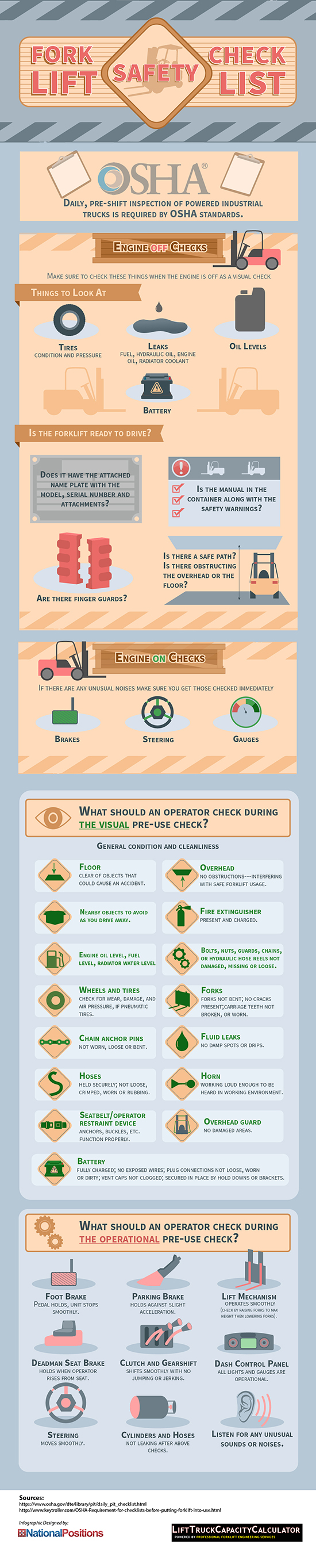
Part of your job as a warehouse manager is to ensure that all of your equipment and machinery is in working order so that you can improve safety conditions for your employees and prevent accidents from happening. OSHA requires that daily pre-shift inspections of your powered industrial trucks, including forklifts, are completed to help achieve these goals. Before operating a forklift in your warehouse you want to perform a series of checks to make sure it is in working order.
With the engine off, check the condition and pressure of the tires. It is also important to inspect oil levels and see if the engine is leaking at all. The condition of the battery should also be noted so that it can be replaced if needed. Once your visual check is complete, ensure that all safety information and manuals can be easily accessed by the operator and that there is enough room above the forklift and in its path for it to be driven safely.
When you turn the engine on, the first thing you should do is listen for any unusual noises so that they can be immediately addressed. Check the brakes, steering, and gauges as well before driving the forklift. Other items that should get your attention include the forks, chain anchor pins, and hoses. If any of these appear to be worn or lose, immediate action should be taken. This will help you reduce risks to your forklift operator and help your team get their job done safely and efficiently.
The forklift operator should also check to make sure the forklift has a legible, accurate data plate that reflects the current configuration of the forklift, including any attachments being used. If the plate is missing or inaccurate, contact Professional Forklift Engineering Services, LLC at (843) 532-6469 or email at support@LiftTruckCapacityCalculator.com to get the data plate updated and the forklift re-certified.
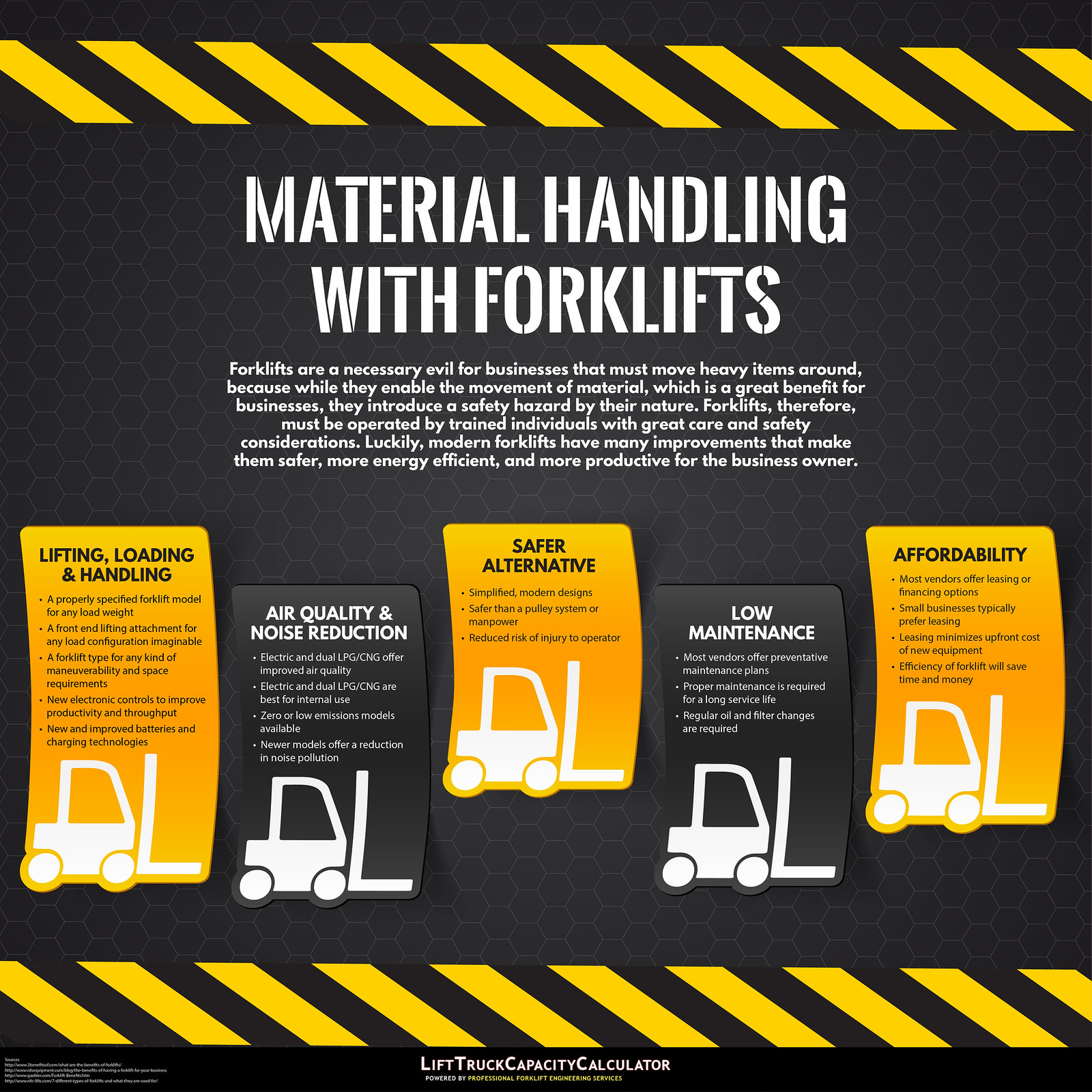
Moving materials and items around a business, warehouse, or job site is necessary for work to be done in many businesses. This means that companies rely on forklifts to move materials, but since safety is always concern and a priority for businesses, they must practice safety to minimize risk to employees and materials. Over time forklifts have become progressively more advanced and safer for operators, but lifting, lowering and moving heavy material with forklifts is precarious by nature, and thus requires skill, care, training and knowledge to be executed safely and efficiently.
First and foremost, the operator should always be aware of the load weight limits specified on the forklift data plate or data label for the particular forklift. Different types of lift trucks have different parameters for maneuverability, operation and safety, and the operator should aware, trained and comfortable with the operation the particular forklift machine. New forklift designs simplify the learning process for operators and deliver greater benefits for companies. For growing businesses, many different machine acquisition options are available to fit the business owners needs. Forklift acquisition should always be done through local dealers and sellers who can review the onsite requirements of the business owner, and provide the necessary local service and support required to keep the forklifts in good operating condition.