Monthly Archives: August 2026
Ensuring that you follow all safety standards and regulations in your warehouse is essential in order to maintain compliance and reduce the risk of injury to your employees. In addition to organizing storage spaces and improving workplace efficiency, understanding the standards set for powered trucks and forklifts will promote safety and increase accountability for your business. These govern everything from workplace lighting, to the storage, to the color of paint on the vehicle. Here are just a few to become familiar with:
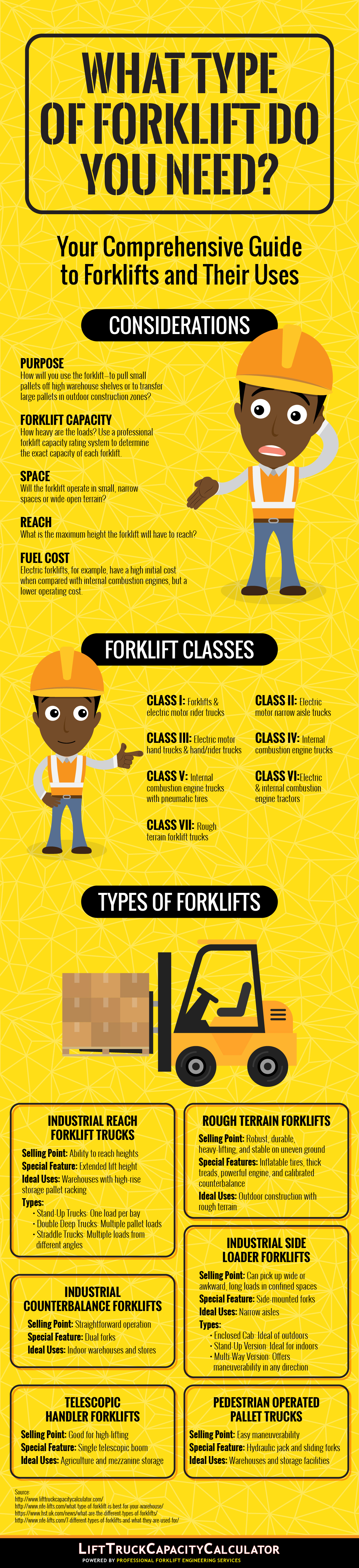
- The USA Standard Safety Color Code for Marking Physical Hazards and Identification of Certain Equipment should be followed in relation to obstructions and aisles.
- Areas designated for battery charging and installations should only be used for that purpose.
- Ensure that the storage and handling of fuel, such as diesel and gasoline, are up to code.
Be sure that your management team and employees are aware of the various safety standards in place for the storage and operation of powered industrial trucks in order to avoid potential injury and loss for your organization.
Understanding the lateral stability of a forklift is essential in order to ensure that operators complete jobs safely when using the equipment. The best way to think about lateral stability for a forklift is to compare it to your car. When you make this comparison, you can see that a forklift is narrower, higher up, and without suspension to handle bumps. Therefore, it is crucially important for an operator to practice safe driving techniques so the lift does not overturn.
Driving and turning at a reasonable speed, as well as exercising caution on slopes, will help maintain the center of balance for the forklift. That way, each job can be safely completed while eliminating the risk of dropping the load or crashing. Be sure to read all safety information when using a rotational attachment, and perform a thorough equipment check before operating the forklift, so that any potential risks can be assessed by management if needed.

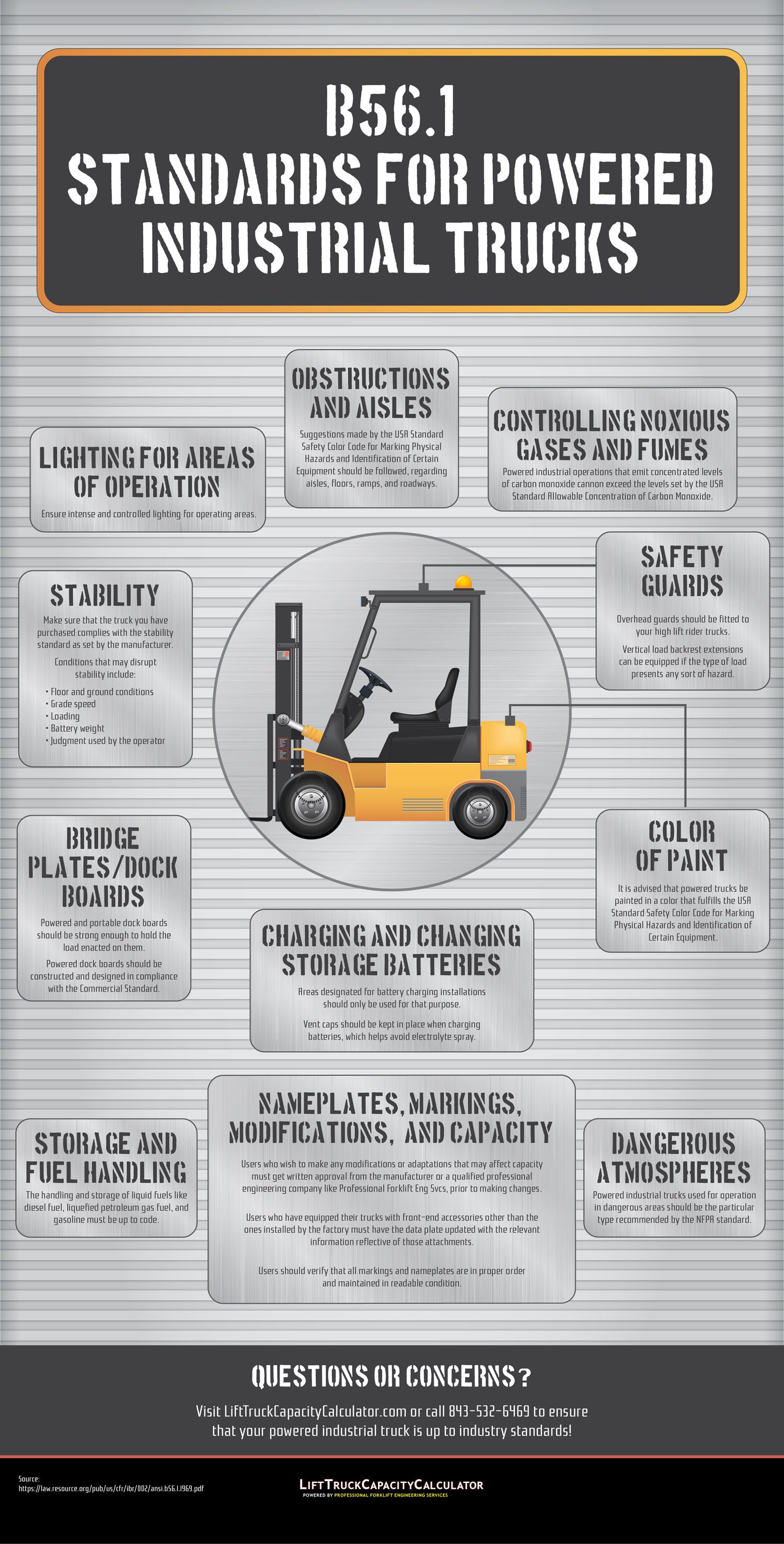
Understanding the capabilities and limitations of your machinery before use allows your employees to safely complete tasks. In addition, your business will see a decreased risk of injury, leading to greater productivity and efficiency. A boom capacity load map helps you achieve these goals, by giving your employees the information they need so they can safely lift materials in the warehouse or out on a job site.
Affixed to the forklift, the boom capacity load map shows the safe amount of weight that can be lifted at certain hook position intervals. The size of the load will affect the hook position, and you want to be sure to never lift over the capacity so that the highest levels of safety can be maintained at all times. Continually educating and retraining employees on the various equipment they use will ensure proper usage, and save time and money lost from injuries and broken machines.
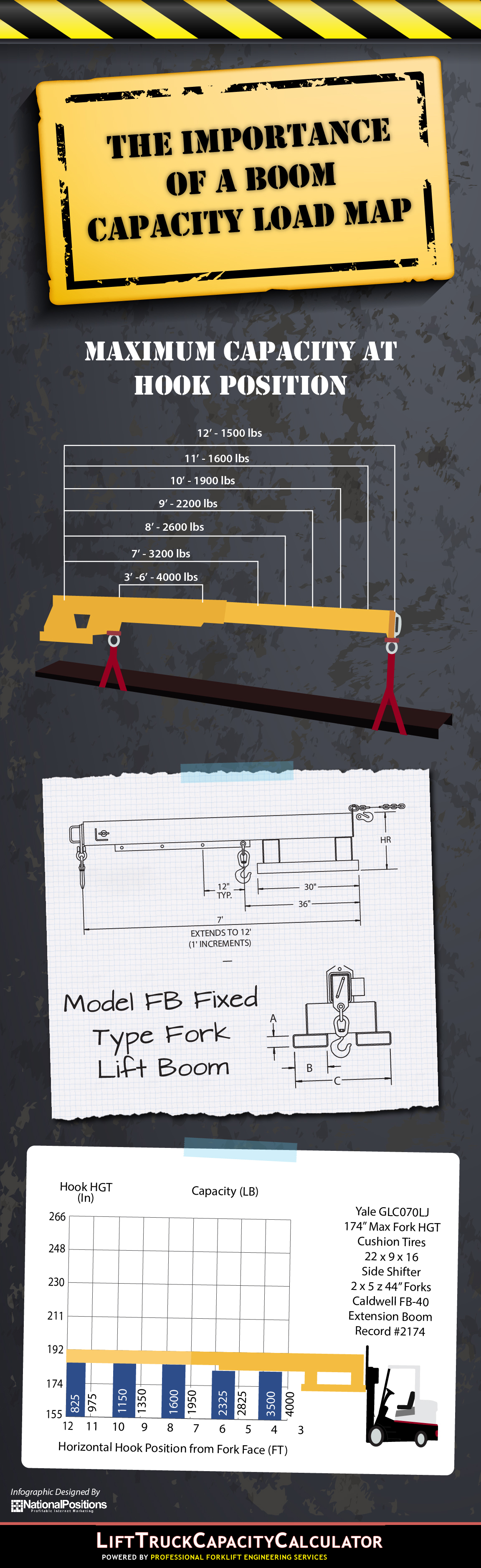
When you are in need of machinery to move products and other materials around your business or job site, using a forklift is one of the easiest and most efficient options. However, with the variety of forklifts available for the job, it can be difficult to decide which will be best for your situation. In order to solve this problem, it is important to consider a few factors.
Start by assessing the purpose of the forklift. Do you need it to pull pallets from a shelf or move large pallets around a construction site? What load capacity is needed to get the job done correctly and safely? Don’t forget to note the size of the space in which the forklift will operate. Choosing one too large will negate any benefits you hope to receive.
You also want to ensure that you have certified forklift operators who can easily operate the lift to help you cut down on time and expenses along the way. Research the type of forklifts available and assess your individual needs before buying or leasing for your company.